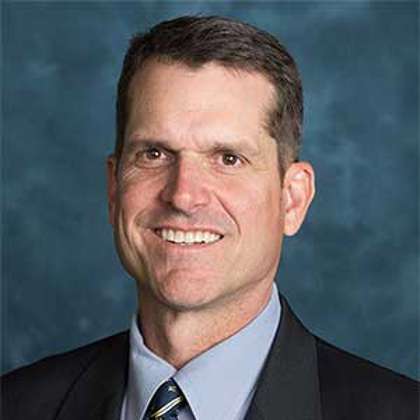
Anand Giridharadas
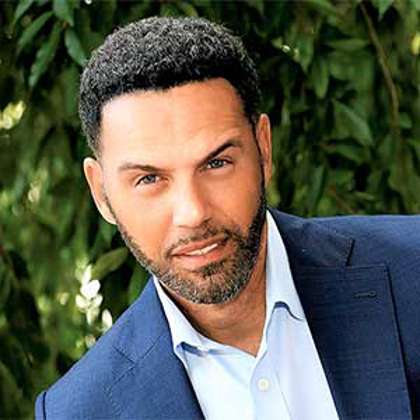
Anand Giridharadas is an author and columnist, writing about a world in transition as seen through the lens of culture. He writes the "Currents" column for The New York Times and its global edition, the International Herald Tribune, and also writes for The New York Times Magazine. He is the author of India Calling: An Intimate Portrait of a Nation's Remaking, about returning to the India his parents left.
He has reported from India, China, Norway, Haiti, Brazil, Colombia, Nigeria, and the United States on subjects ranging from poverty to democracy to terrorism to the social consequences of technology.
Born in Cleveland, Ohio, and educated at the University of Michigan, Oxford, and Harvard, he is a former consultant for McKinsey & Company and later reported from Bombay for the Herald Tribune and the Times. A Henry Crown fellow of the Aspen Institute, he has lectured globally, including at Google, PopTech, the Sydney Opera House, the United Nations, Stanford, and the Harvard Business School. He has also appeared regularly on television and the radio in the United States and internationally, including on CNN, MSNBC, NPR, The Daily Show, and other forums.
Giridharadas lectures on a wide range of topics, bringing a special cultural take to his subjects, whether it's the prospects for America's future, the rise of the non-Western powers, or the relationship between humans and our technologies. He tailors his lectures to his audiences, and can address such topics as the nature of the present American (and Western) predicament; the revolutionary change underway in India; how technology is changing what it means to be human; the future of journalism and writing; and how emerging countries will change what it means to be "modern."
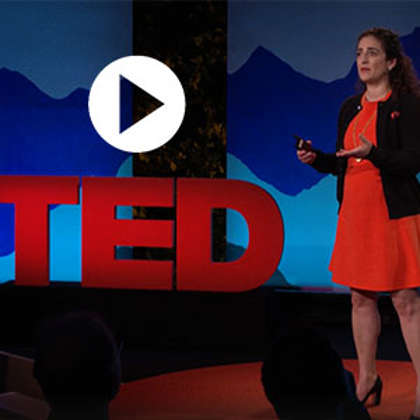
WATCH: Anand Giridharadas on The Daily Show
Topics
The End of the West?
What is the nature of the present American—and Western—predicament, and what are the ways out? Is there hope still for the American Dream? Is this, as some suggest, the end of the West? Anand Giridharadas raises and addresses these questions and more when speaking on this subject.
Giridharadas on the West:
"Faith in perfectibility appears to have retreated in American life. It lives on in weight-loss programs and self-help books... But the belief that you might die in a markedly better existence than the one you came into is fading."
"Americans are becoming foreigners to each other. People in Texas speak of people in New York the way certain Sunnis speak of Shiites... What is creeping into the culture is simple dehumanization, a failure to imagine the lives others lead. Fellow citizens become caricatures. People retreat into their own safe realms. And decency, that great American virtue, falls away."
"If India does become as dynamic and powerful as China, then democracy, multiculturalism and the rule of law will continue to have a forceful champion, with or without America. So will free expression, irreverent newspapers, the separation of powers, elections that actually oust people, the English language as the medium of business, movies that end happily, reality television and the bedrock belief that the best things in a society happen uncoordinated on its streets rather than in its Central Committee. / Many Indians believe they are the heirs to this tradition, that it is their special destiny to be a new America."
"Could America, that great nation of immigrants, become in harder times a nation of emigrants? Could the metropolises of China one day have Americatowns?"
Innovation from the Bottom Up
Why is so much innovation suddenly emerging from the developing world? What does it mean for the West and for the developing world itself? What can we learn about mobile money in Kenya, crowd-sourced crisis mapping in Haiti, and SMS job searches in India? New York Times columnist Anand Giridharadas addresses these questions and more in this illuminating talk, in which he shares fascinating anecdotes on how the developing world—from India and Brazil to South Korea and Afghanistan—is innovating in ways in which the Western world is not.
Giridharadas on innovation in the developing world:
"Everyone-as-informant mapping is shaking up the world, bringing the Wikipedia revolution to the work of humanitarians and soldiers who parachute into places with little good information. / Silicon Valley has been the reigning paradigm of innovation, with its universities, financiers, mentors, immigrants and robust patents. Ushahidi [a Kenyan-born information mapping organization] comes from another world, in which entrepreneurship is born of hardship and innovators focus on doing more with less, rather than on selling you new and improved stuff."
"Forgotten in the American tumult is a global flowering of innovation on the simple cellphone. From Brazil to India to South Korea and even Afghanistan, people are seeking work via text message; borrowing and lending money and receiving salaries on cellphones; employing their phones variously as flashlights, televisions and radios. / Because it reaches so many people, because it is always with you, because it is cheap and shareable and easily repaired, the cellphone has opened a new frontier in global innovation."
The Indian Revolution
Anand Giridharadas discusses the extraordinary changes under way in India, and how they will affect all of us. Giridharadas's lectures on India draw on his book India Calling and his years of reporting on the country.
Giridharadas on India:
"The Indian revolution was within. It was a revolution in private life, in the tenor of emotions and the nature of human relationships. The very fabric of Indianness—the meaning of being a husband or wife, a factory owner or factory worker, a mother-in-law or daughter-in-law, a student or teacher—was slowly, gently unraveling by the force of these dreams, and allowing itself to be woven in new ways."
"Indians from languorous villages to pulsating cities were making difficult new choices to die other than where they were born, to pursue vocations not their father's, to live lives imagined within their own skulls. And it was addictive, this improbable rush of hope. / The shift is only just beginning. Most Indians still live impossibly grim lives. Trickle down, here more than most places, is slow. But it is a shift in psychologies, and you rarely meet an Indian untouched by it."
The Digital Soul: Technology & Us
Technology daily changes how we live. It is invading our consciousness, remaking day by day what it means to work and love, reason and remember. But we tend to reorganize our lives around what features happen to be invented—when perhaps it ought to be the other way around. This is the theme of Giridharadas's lectures on technology and us. How can we consciously shape this new relationship with technology to align with our values, with the kind of lives we wish to lead? How can we seize its benefits to create personal brands and measure aspects of our daily life, all the while surrendering privacy for conveniences, while not losing ourselves? What are the choices to be made, and how might we make them?
Giridharadas on technology:
"Technology is of human making. But these days we contort ourselves to organize life around the tools and not the other way around. If the technologists sell always-on broadband, we end up being always on. If they invent a new gadget, we line up to buy it before knowing its uses. If email can reach us anywhere, we assume that it should... The offerings of technology are not inevitabilities but choices, and that we don't have to live in new ways just because they have been invented. It remains possible to determine first the kind of life you wish to lead, and only then ask how magnificent and hazardous arrays of ones and zeroes can be put to the task of making that life come true."
The Good Society Now: What It Means to Be "Modern" Around the World
In Anand Giridharadas's lectures on globalization and the world, a recurring line of exploration is whether India, China, and other emerging countries are replicating the Western model of the good society, or rather inventing their own definitions of modernity. In these talks, Giridharadas also speaks on issues of development, innovation and the cultural aspect of globalization.
Giridharadas on the world:
"In order to thrive again, Brazil had to depoliticize the quest for a better economy. Leaders had to move beyond their ideologies. Facts had to become more important than principles. And a kind of pragmatic right-left consensus had to emerge—namely, that both a bustling market and an active government are essential to durable economic growth."
"Around the world, middle classes ordinarily devoted to the pursuit of washing machines and flatter screens decided this year, more forcefully than in recent memory, that the world was their problem."
"The challenge for today's modernizers is to match the gains of the Me-centric society while somehow preserving the sense of community that development can so easily erode: restoring the sense, which came so naturally to our ancestors, that we exist for each other, and that to be free and unanchored, self-making and self-protecting, can also be profoundly lonely."
"As with Mumbai and São Paulo and other such cities, Lagos's expectations are now inspired by a life thousands of miles away, while its realities are a product of its own tortuous road to progress. The gap between what is wanted and what can be had grows wider hour by hour... The seduction of globalism is how easy it is for a country to become modern-seeming. The peril of globalism is that it can conceal dysfunction behind a charming veneer, and can, in that sense, become a substitute for real progress."
"Traveling in Norway some weeks before the attacks, I sensed a quiet anxiety in many of those to whom I spoke. In building their cathedral of order, they wondered if they had surrendered something of their former selves: had lost the daring and self-reliance of Isak, had removed themselves from the earth, had protected themselves so well from life's vicissitudes as to drain their vitality away. It sounds strange now, but many asked aloud if Norway had become too comfortable, soft—and whether greatness and invention were still possible amid such calm."
Journalism & Writing in the Digital Age
Anand Giridharadas often explores the future of journalism and writing in our digital, instantaneous age.
Giridharadas on technology:
"In field after field, the information authorities face disruption, with new equations of power replacing the old. Newspapers are learning to let readers talk back. Now that enthusiasts have made a reference work out of Wikipedia, encyclopedias are allowing their audience to write them. Companies are discovering that they must 'engage' with their customers, not just advertise at them. / What do these new equations of influence—the shift from 'power over' to 'power with' others, as some describe it—mean for the writer?"
"Today the writer expects, and is expected, not only to write but also to blog about the writing, bloviate about it on television and the radio, tweet about it, personally market it—and, most treacherously, to stretch out opinions formed from the examination of particular things to subjects far afield."
"What will it mean to bear witness in the future? They say that history is written by the victors. But now, before the victors win, there is a chance to scream out with a text message that will not vanish. What would we know about what passed between Turks and Armenians, between Germans and Jews, if every one of them had had the chance, before the darkness, to declare for all time: 'I was here, and this is what happened to me'?"
Please call 800.225.4575 or contact us for more information on this speaker's speech topics.
Request More Info
| MY SPEAKER LIST | MAKE A REQUEST |
|
Anand Giridharadas
|
|
| Questions about booking? | |
| 617.614.1600 | |
Need help finding a speaker?
The Program Consultants at American Program Bureau Are Here to Help!
Tell us about your event and we will offer custom speaker recommendations specifically tailored for your event's theme, audience, budget or any other criteria your provide. Whether you are looking for a keynote speaker to set the tone for your entire event, an industry expert for an executive briefing or workshop, a motivational speaker to supercharge a sales force, or a celebrity speaker to kick-off your convention, we can help you find the right speaker for your next event.