

Daniel Kraft
Physician Scientist, Innovator & Faculty Chair at Singularity University
Daniel Kraft
Physician Scientist, Innovator & Faculty Chair at Singularity University
Check Fees And Availability for Daniel Kraft
Biography
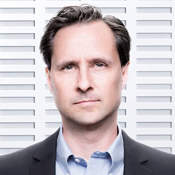
Daniel Kraft, MD, is a Stanford- and Harvard-trained physician-scientist, inventor, and investor who has spent more than 25 years at the intersection of clinical medicine, biomedical research, and emerging technology. His work explores how artificial intelligence, continuous data, and converging technologies are reshaping prevention, diagnosis, therapy, and the delivery of care, and, through his Now, Near and Next framework, what leaders, clinicians, and patients can do about it now rather than someday.
He is Founder and Chair of NextMed.Health (which began as Exponential Medicine at Singularity University), a program and community convening clinicians, technologists, investors, and regulators around the future of medicine, and Founder of Digital.Health, a curated platform for discovering and evaluating digital health and AI solutions. He is Co-Founder and General Partner at Continuum Health Ventures, backing early-stage companies working to democratize health and extend healthspan, and serves as an Adjunct Professor of Medicine at Stanford University School of Medicine. He serves on the boards of Healthy.io and Immunis Biomedical, and was founding faculty at Singularity University, where he chaired its medicine program. He served as chair of the XPRIZE Pandemic & Health Alliance.
Following undergraduate studies at Brown University and medical school at Stanford, Daniel was board certified in both internal medicine and pediatrics after a Harvard residency at Massachusetts General Hospital and Boston Children’s Hospital, and completed fellowships in hematology, oncology, and bone marrow transplantation at Stanford. His laboratory research in stem cell biology, cancer immunotherapy, and bioengineered T-cell differentiation was published in Nature and Science. He is the founder of RegenMed Systems and the inventor of its FDA-cleared MarrowMiner, a device for minimally invasive bone marrow harvest, and holds patents spanning medical devices, immunology, and stem cell therapies.
A six-time TED and TEDMED speaker who has keynoted on five continents, Daniel advises biopharma boards and executive teams, health systems, and startups on AI and digital health strategy. He wrote the lead article for National Geographic’s special issue on the future of medicine, and his work has been featured by CNN and WIRED, most recently appearing on NewsNation’s The Future is Now town hall alongside Neil deGrasse Tyson and Scott Galloway. He is a member of the inaugural class of the Aspen Institute Health Innovators Fellowship and of the Kauffman Fellows Society. He is an active pilot, served as an officer and flight surgeon with F-15 and F-16 fighter squadrons in the Massachusetts and California Air National Guard, and was a finalist for NASA astronaut selection.
Speaker Videos
The Future of AI and Digitally Enabled Health & Medicine
Reimagining Health, Devices & BioMedicine
The Future of Ai and Digitally Enabled Health & Medicine
Speech Topics
Health and Medicine in the Age of AI: What’s Now, Near and Next
Accelerating, often exponential technologies are converging to make healthcare more predictive, personalized, and connected. In his signature keynote, Dr. Daniel Kraft takes audiences on a fast-paced, highly visual tour of foundation models and agentic AI, wearables, multi-omics and liquid biopsy, robotics, synthetic biology, and regenerative medicine, showing why the biggest shifts happen where these advances meet: earlier detection, more personalized therapies, longer healthspan, and broader access.
His Now, Near and Next framework separates what is ready today from what is emerging and what is further out, with examples built for the audience in the room. Daniel makes exponential thinking concrete, challenging linear assumptions built on yesterday’s capabilities. He argues that the real enemy is friction, not technology, and that AI used well can return time and attention to clinicians and patients instead of replacing them. Audiences leave inspired about what is possible and clear on what they can do about it, starting now.
AI in Healthcare: From Pilots to Practice
Generative, multimodal, and agentic AI are arriving in healthcare faster than most organizations can absorb them. Dr. Daniel Kraft offers a grounded look at where these tools are delivering value today, where the evidence is still thin, and where the claims outrun the capability. Applications span clinical documentation, decision support, diagnostics, patient engagement, and enterprise operations.
The harder question is what separates real deployment from pilots that never scale. Daniel examines the requirements: usable data, clinical and operational validation, workflow integration, governance, workforce readiness, and a payment model that works, with human judgment and accountability kept in the loop. He makes the case for intelligence amplification rather than automation anxiety, and for redesigning work rather than bolting AI onto broken processes. Tailored to clinical, health system, biopharma, payer, and technology audiences, the session leaves participants knowing which applications to back first, what to ask before scaling any of them, and how to prepare their teams.
AI and the Future of Biopharma: From Discovery to the Patient
AI is changing the economics of discovering and developing therapies. Dr. Daniel Kraft explores applications across target identification, molecular design, trial design and site selection, synthetic control arms, and regulatory submission, and treats the AI and digitally enabled patient journey as one connected layer: shortening time to diagnosis, finding patients upstream across records and claims, and understanding adherence and response once therapy begins.
The discussion extends to commercial, medical affairs, and market access, where the same tools are reshaping how companies reach clinicians and patients. Daniel’s central argument is that when everyone can buy the same models, the companies with a differentiated data position, and the ability to use it, will separate from the rest. Tailored to biopharma leadership, R&D, commercial, and medical affairs teams, the session leaves leaders with a clear read on their own data position, the validation bar their AI claims should meet, and where this belongs on the management agenda.
Investing in the Future of Health: What’s Next and What Will Scale
Scientific progress creates possibilities; adoption decides which become durable businesses. Dr. Daniel Kraft brings the perspective of a physician-scientist, Kauffman Fellow, and general partner at Continuum Health Ventures to how AI, advanced diagnostics, longevity, and new models of care are rewriting business models across healthcare delivery, biopharma, and consumer health.
Using the Now, Near and Next framework, Daniel shows how to read the evidence behind an emerging opportunity, and how reimbursement, workflow fit, and data advantage decide which companies actually get there. He explores what this means for incumbents and challengers alike as care settings shift and consumer expectations move faster than the system does. Customized to the sectors in the room, the session leaves investors with Now, Near and Next applied to their own horizons and portfolio strategy, a sharper line between technical promise and commercial readiness, and better diligence questions.
From Sick Care to Health Care: The Future of Longevity and Healthspan
Longer life is only part of the goal; healthspan is about the years people live in good health. Dr. Daniel Kraft, a physician and stem cell biologist with experience in regenerative medicine and clinical trials, explores the shift from treating illness after it appears toward proactive, personalized health, with consumers reshaping prevention, monitoring, and access without waiting for permission from the system.
He examines what the evidence supports across metabolic health, sleep, continuous monitoring, and consumer diagnostics, and what it does not, then looks ahead to emerging science worth watching: cellular senescence and reprogramming, regenerative and stem cell approaches, and gene-based therapies. For consumer health, employer, payer, wellness, and longevity audiences, the session separates longevity science from longevity marketing, while keeping access and the behavioral and social factors no wearable can measure firmly in view.
Stage Zero: Earlier Detection and the Future of Prevention
Wearables, digital biomarkers, at-home testing, and low-cost personal omics reveal what is happening between clinical visits. Dr. Daniel Kraft explores how these tools, alongside liquid biopsy, multi-cancer early detection, computational pathology, and AI-assisted imaging, are moving detection toward stage zero, before symptoms appear and before disease takes hold.
The session examines both the promise and the limits of earlier detection, and what it means when the lab moves from the end of the workup to the front of prediction. Key questions include who should be tested, how findings are validated and interpreted, what follow-up is needed, and whether earlier detection improves outcomes. Tailored to diagnostics, laboratory, imaging, pathology, and life sciences audiences, it leaves participants with a practical test for any new diagnostic: does better detection lead to appropriate action and measurable patient benefit?
From Hospital to Home: Care Without Walls
Prevention, diagnostics, and selected acute care are moving beyond the hospital and the clinic. Dr. Daniel Kraft explores what this shift means for health systems, clinicians, and patients, and what the hospital becomes as a result. Examples include remote monitoring, home diagnostics, virtual care, and hospital-at-home programs.
The discussion examines the evolving clinician role, from the virtualist to AI-augmented care teams, and what that demands of training and staffing models. It also looks squarely at the operational reasons promising programs stall before they scale, from patient selection and escalation pathways to workflow, reimbursement, and regulation. Tailored to health system and care delivery audiences, the session leaves leaders with a clear view of which services can move closer to patients and what it takes to deliver them safely, sustainably, and at scale.
Leading Through Exponential Change
Boards and executive teams need a clear view of what their organization could become as technologies converge and accelerate. In this facilitated, closed-door session, Dr. Daniel Kraft applies his Now, Near and Next framework to the organization’s specific strategy, set against what competitors are actually doing, drawing on more than a decade leading Exponential Medicine and NextMed Health.
The discussion makes exponential thinking practical: challenging linear assumptions and focusing on where to act, what to test, and what to monitor. It starts with the data question, what the organization uniquely holds, whether it is governed and usable, and whether AI claims meet the same standard as clinical or commercial claims, then turns to talent, leadership, and governance gaps, including the questions directors should ask and what management should report. Available as a two-to-three-hour session or part of an agreed half-day or full-day agenda, the engagement includes a written summary of agreed priorities, with preparation and scope confirmed in advance. Recent sessions include the boards of Argenx and Atrium Health and the executive leadership teams of Teva and Roche.
)
)
)