

Marita Cheng
Entrepreneur in AI
Marita Cheng
Entrepreneur in AI
Check Fees And Availability for Marita Cheng
Biography
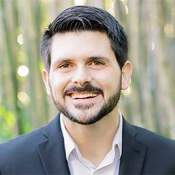
Marita Cheng AM, inducted as the youngest Member of the Order of Australia in 2019, named by Forbes as one of the World's Top 50 Women In Tech 2018, Forbes 30 Under 30 2016, and 2012 Young Australian of the Year, is a technology entrepreneur and women in technology advocate. Marita Cheng is the founder and CEO of Aubot (formerly called 2Mar Robotics), which makes a telepresence robot, Teleport, for kids with cancer in hospital to attend school, people with a disability to attend work and to monitor and socialize with elderly people. Teleports have been sold to offices, museums, coworking spaces, for kids with cancer in hospitals and for security. As well as telepresence robots, aubot does research and development in robotic arms, virtual reality and autonomous mapping and navigation.
aubot has been recognized on a global scale through the Forbes 30 Under 30 Asia in 2016, and through being called "the coolest girl at CES 2014" by VentureBeat magazine. Marita has presented about Teleport at the M.A.P. International CEO Conference in the Philippines in 2016, MIT Technology Review EmTech Singapore in 2015, and the 2014 World Entrepreneurship Forum in Lyon France.
In 2015, Marita attended Singularity University's 10-week flagship Graduate Studies Program, held at NASA Ames in Mountain View, funded by a $40,000 scholarship from Google. While there, she cofounded Aipoly. Aipoly's first application recognizes objects in real time on a smartphone using convolutional neural networks and relays them to people who are visually impaired. Since launching at CES in January 2016, Aipoly is now available in 23 languages and has been downloaded over 500,000 times.
Marita was named the 2012 Young Australian of the Year for demonstrating vision and leadership well beyond her years as the Founder and Executive Director of Robogals Global. Noticing the low number of girls in her engineering classes at the University of Melbourne, Marita rounded up her fellow engineering peers and they went to schools to teach girls robotics, as a way to encourage girls into engineering. While on academic exchange at Imperial College London, Marita expanded the group to London and through innovation and sheer will, Marita then expanded Robogals throughout Australia, the UK, the USA and Japan. The group runs robotics workshops, career talks and various other community activities to introduce young women to engineering.
Robogals has now taught 100,000 girls from 11 countries our robotics workshops across 32 chapters. Robogals has been internationally recognized though the Global Engineering Deans Council Diversity in Engineering Award (2014), Grace Hopper Celebration’s Anita Borg Change Agent Award (2011), and the International Youth Foundation’s YouthActionNet Fellowship (2011).
Marita regularly travels around Australia presenting her work including appearing on Q&A on ABC beside two Nobel Laureates and the Chief Scientist of Australia (TV audience 600,000), and alongside Ashton Kutcher at Lenovo’s #TechMyWay (online audience 35,000). As well, she has presented overseas at Foxconn's H.Spectrum by Yonglin Healthcare Startup Conference in Taiwan (2016), the 37th Kumon Japan Instructors Conference in Japan (2016), the World Engineering Education Forum in Dubai (2014), and the World Association of Girl Guides and Girl Scouts' World Conference in Hong Kong (2014).
Marita was born in Cairns, Queensland, Australia. She grew up in housing commission with her brother and single-parent mother, who worked as a hotel room cleaner. She graduated from high school in 2006 in the top 0.2% of the nation, and that year was awarded Cairns Young Citizen of the Year for her volunteering and extra-curricula efforts, which included winning awards for mathematics, Japanese and piano. Marita speaks English, Cantonese and Japanese.
Marita has a Bachelor of Engineering (Mechatronics) / Bachelor of Computer Science from the University of Melbourne. She serves on the boards of Robogals Global, the Foundation for Young Australians, and RMIT's New Enterprise Investment Fund, where she helps decide on startup investments, the Victorian State Innovation Expert Panel, and the Clinton Health Access Initiative's Tech Advisory Board. In her spare time, Marita enjoys reading, traveling and daydreaming. Marita Cheng works in partnership with APB Speakers for speaking engagements worldwide.
Speaker Videos
Marita Cheng - nbn™ STEMpreneur Ambassador
We Need to Teach Our Kids to be Makers: Marita Cheng at TEDxSydney
Ideas That Travel: Marita Cheng
If the blind could see | Alberto Rizzoli and Marita Cheng | TEDxMelbourne
The Next Generation in Robotics
Speech Topics
AI-Powered Robotics: From Labs to Real-World Impact
Marita Cheng has spent her career building robots - and has seen firsthand how difficult it is to move from impressive demos to real-world deployment. For decades, robotics struggled with reliability, cost, and scale, leaving most systems stuck in controlled environments. In this talk, she shares a behind-the-scenes perspective on why robotics lagged for so long, what has fundamentally changed with the rise of modern AI, and what it actually takes to deploy robots in the real world. Drawing on her experience across engineering, product, and commercialization, Marita offers a practical, no-hype view of how AI is finally enabling robotics to transition from lab experiments to systems that create real economic impact.
Key Takeaways:
- Why the gap between a working prototype and a scalable product is the hardest problem in robotics
- What recent advances in AI have changed — and why this moment is different from past hype cycles
- The real path forward: how the industry moves from one working robot to millions deployed globally
I Build Robots: Here's What's Actually Happening
What comes to mind when you think of a robot? For many, it's still science fiction - humanoids from movies or futuristic assistants that don't yet exist. But the reality is both more practical and more interesting. Robots are already working alongside us - in factories, hospitals, warehouses, and increasingly in everyday environments - often out of sight.
In this talk, Forbes 30 Under 30 robotics founder Marita Cheng shares a grounded look at where robotics actually stands today. Drawing on her experience building and deploying robots through Aubot, she explores the systems already creating real impact, the challenges that have slowed progress, and how advances in AI are changing what's possible. From behind-the-scenes automation to robots designed to support people in daily life, this talk examines what's here now, what's coming next, and what it will take before truly general-purpose robots become part of everyday life.
Key Takeaways:
- Where robots are already creating real-world value today - and why most of them are invisible to the public
- What has historically held robotics back - and how recent advances in AI are changing the trajectory
- What it will take for robots to move from specialized tools to general-purpose systems in everyday life
Artificial Intelligence on the Move
AI isn't just writing emails and generating images anymore - it's learning to move. It's guiding autonomous vehicles through city streets, enabling humanoid robots to manipulate objects they've never seen before, and powering systems that can perceive, reason, and act in the physical world. Marita Cheng co-founded Aipoly, which used neural networks to help blind users identify objects in real time - winning Best of Innovation at CES in 2017 and 2018 - and went on to found Aubot, where AI meets hardware and leaves the lab. Marita walks you through what's genuinely working in AI today, what's coming next, and what happens when artificial intelligence stops being software on a screen and starts operating in physical space.
Key Takeaways:
- AI is no longer confined to screens - it's moving, acting, and interacting in the physical world
- Real-world robotics success requires combining AI with hardware, data, and human-centered design
- The next phase of AI will redefine industries as machines go from observing to actively doing
"Robot Queen to Change the World"
These are actual headlines from national Australian newspapers. Learn how Marita Cheng went from small town girl living in government housing to conquering the globe as one of Forbes Top 50 Women in Tech in the World, and the second youngest person to become a Member of the Order of Australia. Noticing the limited number of girls in her engineering class, at the age of 19, Marita founded Robogals to inspire girls into robotics, growing the organization into an international movement. She followed that up with artificial intelligence company Aipoly to help the blind identify objects in real time, which resonated with millions of people. And robotics company Aubot, making robots to help people in their everyday lives. Hold on tight as pocket rocket Marita shares how she changed the world.
Key Takeaways:
- The only failure is failure to try
- Do your best at what’s in front of you, and more opportunities will present themselves
- Choose yourself
Zero to Global: How Ideas Become Movements
Marita Cheng has done it three times. At 19, she started Robogals from her university dorm room — it grew to 4,000 volunteers in 13 countries, teaching 140,000 girls robotics. She co-founded Aipoly, reaching blind users worldwide. And she founded Aubot, deploying robots in hospitals and workplaces across the country. How does the same person keep turning ideas into global enterprises? Learn the practical frameworks Marita uses — 3-Month Goals to create momentum, Accountability Buddies to stay on track, the Wall of Change to visualise progress, and the Uncomfortable Zone to push past the point where most people stop. Figure out how you too can go from zero to "how did I just do that?"
Key Takeaways:
- A repeatable framework - 3-Month Goals, Accountability Buddies, and the Wall of Change - to get any project off the ground
- How to push through the Uncomfortable Zone, where most ideas stall and die
- Real examples of these systems being used to build three global ventures from nothing
Leading Without Authority: Lessons from Leading 4,000 Volunteers
How do you lead 4,000 people who don't report to you, aren't getting paid, and can quit at any moment? That was Marita Cheng's reality as the founding CEO of Robogals. From her laptop, she built and managed volunteer teams across the USA, Australia, the UK, Japan, and New Zealand — inspiring them to teach 140,000 girls robotics in 13 countries. No budget. No playbook. No direct authority. Marita shares what she learned about leading when you can't rely on titles, salaries, or org charts. How do you motivate people to work towards a common goal? How do you create community when your team is isolated from one another? How do you get thousands to follow when you have no formal authority?
Key Takeaways:
- Creating community around a common vision
- Design systems and habits that keep team members engaged, productive, and aligned with your mission
- Frontloading asynchronous communication: freeing yourself for big-picture work while your team keeps moving toward the goal
140,000 Girls and Counting: The Robogals Story
When Marita first entered her engineering classes, she thought, "where are all the girls?" And so in her second year at university, she decided to do something about it. She founded Robogals to get girls interested in engineering and technology careers and tertiary studies by going to schools with robots and teaching girls how to build and program them. Now, the organization has taught over 100,000 girls in 11 countries. Awarded a prestigious Churchill Fellowship to study "strategies to get girls interested in engineering", Marita shares insights from the USA, Canada, the UK, Germany, Jamaica, Japan and Australia on getting girls excited about engineering and giving them the tools to take on any challenge. For her work with Robogals, Marita received the Anita Borg Change Agent Award, Global Engineering Deans Council Diversity Award, and was named the Young Australian of the Year.
Key Takeaways:
- Evidence-based strategies from seven countries on what actually works to get girls into STEM
- It can start with me — How one person taking initiative can spark change that grows into something much bigger
- It doesn’t take confidence, it just takes action
Related Speakers
)
)
)
Emmy-Winning CBS Sunday Morning Correspondent, NOVA Host & Former New York Times Columnist
)